
April is Heartworm Prevention Month, an important reminder for pet owners across British Columbia to stay proactive about protecting their pets from heartworm disease—a serious and potentially fatal condition that can quietly progress before symptoms become obvious.
Heartworm disease is caused by Dirofilaria immitis, a parasite spread by mosquitoes. Once transmitted, heartworms migrate to the heart, lungs, and associated blood vessels, where they can grow to significant lengths and cause progressive damage to vital organs.
At Boundary Bay Veterinary Specialty Hospital (BBVSH) Surrey, our cardiology team and board-certified surgical specialists work closely with referring veterinarians to support pets with advanced or complicated heartworm disease, particularly when the heart is affected and specialized intervention is required.
Heartworm Disease in British Columbia
While heartworm disease in pets is less common in Canada than in many parts of the United States, it does occur in southern regions of British Columbia, including the Lower Mainland. Seasonal mosquito activity, combined with wildlife reservoirs such as coyotes and foxes, contributes to ongoing risk during warmer months.
Dogs, cats, and ferrets can all be infected. Even pets that spend most of their time indoors are vulnerable, as mosquitoes can easily enter homes. For cats in particular, infection may occur with very few worms—but the consequences can still be severe.
How Heartworm Disease in Pets Spreads
Heartworm transmission relies on both mosquitoes and animal hosts. The process includes several stages:
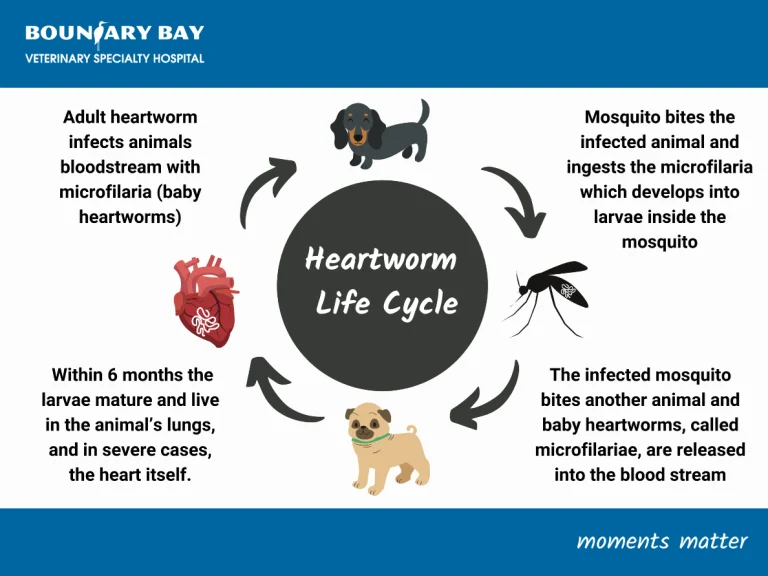
- A mosquito feeds on an infected animal and ingests microscopic baby worms (microfilariae)
- Over the next 10–14 days, these larvae develop inside the mosquito
- When the mosquito bites another pet, infective larvae enter through the bite wound
- The larvae migrate through tissues and eventually reach the heart and lungs, where they mature
Adult heartworms can survive for five to seven years in dogs and two to three years in cats, continuing to damage tissues over time.
🦟 Just one infected mosquito bite is enough to transmit heartworm disease, which is why prevention remains essential.
Signs of Heartworm Disease in Dogs and Cats
Dogs
Dogs are the natural host for heartworms, allowing the parasite to mature and reproduce. As worm numbers increase, damage to the heart and lungs becomes more severe.
Signs may include:
- Chronic coughing
- Reduced stamina or reluctance to exercise
- Breathing difficulties
- Weight loss or poor appetite
- Abdominal swelling from fluid accumulation
- Signs of heart failure
In advanced cases, dogs may develop caval syndrome, a medical emergency where worms obstruct blood flow through the heart.
Cats
Cats are atypical hosts, and many infections involve only immature worms. Even so, the inflammatory response—known as heartworm-associated respiratory disease (HARD)—can be life-threatening.
Possible signs include:
- Coughing or wheezing
- Rapid or laboured breathing
- Vomiting unrelated to eating
- Lethargy or weight loss
- Sudden collapse or unexpected death
Because signs often resemble asthma or bronchitis, diagnosis can be challenging.
How Heartworm Disease in Pets Is Diagnosed
In Dogs
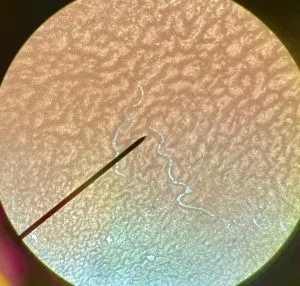
Diagnosis typically includes:
- Blood tests to detect heartworm antigens and microfilariae
- Imaging such as chest X-rays and echocardiography to evaluate heart and lung involvement
- Additional bloodwork to assess overall health
Annual testing is recommended, even for dogs on consistent prevention.
In Cats
Diagnosis is more complex and may involve:
- Antigen and antibody testing
- Chest imaging to identify lung inflammation
- Echocardiography to evaluate the heart
Diagnosis often relies on combining test results with clinical signs and history.
Prevention: The Most Effective Protection for Heart Disease in Pets
Heartworm disease is completely preventable with veterinarian-prescribed medications. Preventives are available as monthly oral or topical products, and as longer-acting injectable options for dogs.
Veterinarians in Canada recommend year-round prevention and regular testing, particularly as climate patterns and mosquito activity continue to shift. Prevention should always be discussed with your primary care veterinarian as part of routine wellness care.
Advanced Heartworm Disease and Specialty Care for Pets
When heartworm disease becomes complicated or involves the heart, referral to a specialty hospital may be recommended.
At BBVSH Surrey, our cardiology team works alongside board-certified surgeons to:

- Perform advanced cardiac imaging
- Assess heart structure and function
- Identify life-threatening complications such as caval syndrome
If heartworms are found within the heart itself, surgical removal may be necessary to save a pet’s life.
Treatment Options
Dogs
Dogs without direct heart involvement may be treated using a staged medical protocol that includes:
- Antibiotics to reduce inflammation
- A series of injections to eliminate adult worms
- Strict exercise restriction over several months
With careful management, this approach is highly successful.
Cats
There is no approved medical treatment to eliminate heartworms in cats. Treatment focuses on managing inflammation and clinical signs. In select cases, surgical removal may be considered. Because of these limitations, prevention is especially critical for cats.
Protecting Pets in BC Starts with Prevention
Heartworm disease may be less common in British Columbia, but it remains a serious risk. Early testing, consistent prevention, and timely referral for advanced care can make a life-saving difference.
If heart involvement is suspected, BBVSH Surrey’s cardiology team and board-certified surgical specialists are available to support your veterinarian and provide advanced care for complex cases.
Heartworm Prevention FAQs – BBVSH Surrey
What is heartworm disease?
Heartworm disease is a serious parasitic infection spread by mosquitoes. The worms live in the heart, lungs, and blood vessels, where they can cause lung disease, heart failure, and organ damage.
Is heartworm disease present in British Columbia?
Yes. While less common than in warmer regions, heartworm disease occurs seasonally in southern British Columbia, including the Lower Mainland.
Can indoor pets get heartworms?
Yes. Mosquitoes can enter homes, so both indoor and outdoor pets are at risk.
What are the symptoms of heartworm disease in dogs?
Symptoms may include coughing, fatigue, breathing difficulty, weight loss, abdominal swelling, and signs of heart failure.
What are the symptoms of heartworm disease in cats?
Cats may show coughing, laboured breathing, vomiting, lethargy, or sudden collapse. Even a small number of worms can cause severe disease.
How is heartworm disease diagnosed?
Diagnosis involves blood testing and imaging. Cats often require multiple tests due to the complexity of the disease.
Why is annual testing important?
Annual testing confirms that prevention is effective and allows for early detection if infection occurs.
Is heartworm disease preventable?
Yes. Veterinarian-prescribed preventive medications are highly effective when given consistently.
When should a pet see a cardiology team?
Pets with advanced disease, heart involvement, or complications such as caval syndrome may be referred for cardiology evaluation and advanced imaging.
Can heartworms be surgically removed?
In severe cases where worms enter the heart, surgical removal may be required. At BBVSH Surrey, this is performed by board-certified surgeons working with the cardiology team.
Is there treatment for heartworm disease in cats?
There is no approved medical treatment to eliminate heartworms in cats. Management focuses on supportive care and monitoring.
Why is Heartworm Prevention Month important?
It highlights a preventable disease and encourages pet owners to stay up to date with testing and prevention.
