
When we think of heroes, many of us picture capes and dramatic rescues. But in Surrey, some of the most impactful heroes walk on four paws and give their gifts quietly—one donation at a time.
At Boundary Bay Veterinary Specialty Hospital (BBVSH), these dogs and cats are our Heroes with Fur. Through blood donation and our blood bank, they support pets they will never meet, offering strength and stability during moments of medical crisis. As we recognize Heart Month this February, it’s especially meaningful to highlight these donors—because their contributions come quite literally from the heart, helping other animals survive trauma, illness, and emergency care when time matters most.
Giving Back: Donor Stories From Our Community
For many families, blood donation begins with a simple realization: one healthy pet can make a lifesaving difference—and regular donors help ensure blood is already available when emergencies strike.
At BBVSH, Dr. Sheila Hoe sees this impact every day. As a specialty and emergency hospital, BBVSH treats some of the most critical cases from across the Lower Mainland and throughout B.C. When pets arrive with severe trauma or life-threatening illness, having blood products ready can make the difference between immediate stabilization and dangerous delays.
“One donation can save a life,” Dr. Hoe explains, “but regular donors help ensure that lifesaving blood is already on the shelf when emergencies happen.”
That readiness depends on families like Bonny MacRae and her rescue dog, Tux.
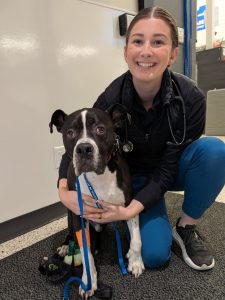
Bonny began bringing Tux to BBVSH after a friend needed emergency care for their pets and shared information about the blood donor program. After an initial examination, Tux turned out to be an excellent candidate. He donated several times before his blood was urgently needed—helping build the blood bank long before an emergency call came in.
Then, just before Halloween, Bonny received a call.
“They said, ‘Bonny, we’ve got an emergency. Is there any way you could get Tux in here today?’ And I said, ‘Oh, absolutely,’” she recalls.
Tux’s donation helped another dog experiencing a medical emergency. Because canine blood can be separated into components such as plasma and packed red blood cells, a single donation has the potential to help more than one patient.
“I just think it certainly doesn’t harm the dog,” Bonny says. “They examine them head to foot, so you know your dog’s in good health.”
Bonny now encourages other pet owners to consider donating. “Because you never know when it’s going to be your pet in that position.”
Alongside dedicated canine donors like Tux, feline donors are especially needed.
Zima, a cat who donates blood with the support of her owner Katie, represents a smaller but critically important group of donors. Fewer cats donate blood than dogs, and because cats are smaller, a single feline donation typically helps one other cat in need. There are no universal feline donors, which makes having enough cats enrolled essential for timely care.

Katie chose to enroll Zima after hearing from a friend, whose cat was in a critical situation and was being cared for at BBVSH at the time, that the hospital didn’t have a lot of feline blood for transfusions. Her decision helps ensure that when a cat arrives in crisis, the right blood may already be available—without delay.
Katie says, “I guess this isn’t something people think about often which is why cat donors aren’t very common; I certainly hadn’t considered animal blood donations before if it wasn’t for my friend telling me about it. After checking the website for more info and seeing that Zima is young and chonky enough, I decided to sign Zima up. Even though driving Zima to the hospital stresses her, knowing that she’s able to play a small part, make a difference, and help those in need makes this all worth while.”
“We’re incredibly thankful for every donor,” Dr. Hoe says. “We want the best for our clients and for our patients, no matter what.”
Stories like Bonny and Tux’s—and Katie and Zima’s—reflect what BBVSH sees every day: owners choosing to give back, and pets quietly helping ensure lifesaving care is available when it’s needed most.
Why We Always Need More Donors
These stories also highlight an important reality: even with dedicated donors, the need for blood never stops.
Blood transfusions are a cornerstone of emergency and critical care. Pets experiencing internal bleeding, immune-mediated disease, clotting disorders, or major trauma may rely on transfusions to survive—often with little warning.
“Our donor pets are an essential part of the care we provide,” says Dr. Tiffany Jagodich, part of BBVSH’s critical care team. “Having blood available allows us to act quickly—sometimes within minutes—when patients need it most.”
Donors may age out of the program over time, and emergencies don’t always align with scheduled donation days. While many donor families generously come in on short notice when called, having blood already on hand allows BBVSH to respond immediately.
Blood type diversity also matters. Dogs have multiple blood groups within the Dog Erythrocyte Antigen (DEA) system, and cats have three main blood types—A, B, and AB—with no universal donor. A larger, more active donor pool means more blood types available, fewer delays, and greater readiness when emergencies happen.
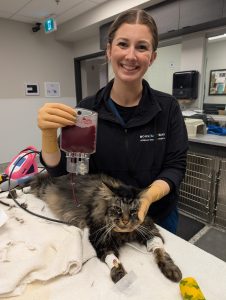
Simply put, the more donors we have, the better prepared we are to save lives.
Is Blood Donation Right for Your Pet?
Blood donation isn’t right for every pet. To protect both donors and recipients, dogs and cats must meet specific health, lifestyle, and temperament criteria before joining the program. BBVSH carefully evaluates each potential donor to ensure the process is safe, appropriate, and comfortable for the animal.
Once accepted into the program, donor visits are straightforward and carefully supervised by our veterinary team. Pets receive physical exams, bloodwork, and ongoing monitoring at no cost to owners. Most dogs donate while awake and relaxed, while cats receive mild sedation to help keep them comfortable throughout the process.
After donating, pets return home the same day—often unaware that their contribution may help another animal’s heart keep beating a little longer.
A Shared Commitment to Care
Blood donation at BBVSH is made possible by healthy pets, dedicated owners, and a medical team ready to act when it matters most. Together, they ensure lifesaving blood is available for dogs and cats facing critical moments—when it’s needed now.
As we reflect during Heart Month, we’re grateful to the Heroes with Fur who make this work possible and to the families who support them.
If you think your pet could give blood, please check out our blood donation page, eligibility criteria and fill out an application form.
Frequently Asked Questions About Pet Blood Donation
Why is pet blood donation important?
Pet blood donation supports emergency and specialty veterinary care. Dogs and cats may require transfusions due to trauma, surgery, internal bleeding, immune-mediated disease, or serious illness. Having blood available allows veterinary teams to act quickly when time matters most.
Why does BBVSH always need more blood donors?
Even with dedicated donors, the need for blood is ongoing. Donor pets may age out of the program, emergencies are unpredictable, and different patients require different blood types. A larger donor pool helps ensure blood is already available rather than relying on emergency call-ins.
Can both dogs and cats donate blood?
Yes. Both dogs and cats can donate blood if they meet specific health, lifestyle, and temperament criteria. However, feline donors are especially needed because fewer cats donate and their blood is more limited in availability.
Why are cat blood donors so important?
Fewer cats donate blood than dogs, and cats are smaller, meaning a single feline donation typically helps one other cat in need. Cats also have no universal blood donor, so having enough feline donors enrolled is essential for timely transfusions.
Do dog and cat blood donations help patients differently?
Yes. Canine blood can often be separated into components such as plasma and packed red blood cells, allowing one donation to potentially help more than one patient. Feline donations are usually used for a single recipient, which makes each cat donor especially valuable.
How does having more donors improve emergency care?
- Blood available immediately
- A wider range of blood types on hand
- Faster response during emergencies
- Less reliance on last-minute donor call-ins
This preparedness directly improves patient outcomes.
What is the blood donation process like for pets?
Accepted donor pets receive a physical exam, bloodwork, and ongoing monitoring at no cost to owners. Most dogs donate while awake and relaxed; cats receive mild sedation for comfort. Pets typically return home the same day.
Is blood donation safe for pets?
Yes. BBVSH carefully screens all donor pets and monitors them closely. Donor comfort and safety are always a priority.
How often can a pet donate blood?
Eligible pets may donate approximately every 6–12 weeks, depending on their size, health, and program guidelines. Once your pet is registered as a donor, our team will discuss the appropriate interval with you. If you think your pet could give blood, please check out our blood donation page, eligibility criteria and fill out an application form.
How does BBVSH recognize donor pets?
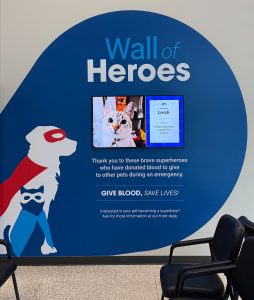
Donor pets are honoured through BBVSH’s Wall of Heroes, recognizing the animals and families who help make emergency care possible.
